A drive built for Darlington ground
Most of Darlington sits on glacial till, a stiff clay that holds water in winter and shrinks back in a dry summer. Some suburbs, such as parts of Mowden and Blackwell, are on sand and gravel instead, and the ground by the becks in Cockerton is soft alluvium. That matters more than the surface on top. A drive laid on too thin a base, or straight onto soil, sinks in the wheel tracks and spreads at the edges within a few winters.
So every job starts with the same things: dig to a firm formation, lay a crushed-stone sub-base in compacted layers, fit edging that cannot move, and give the water somewhere to go. Your quote sets out the depth of dig, the base and the drainage, not just the finished surface.
Six surfaces
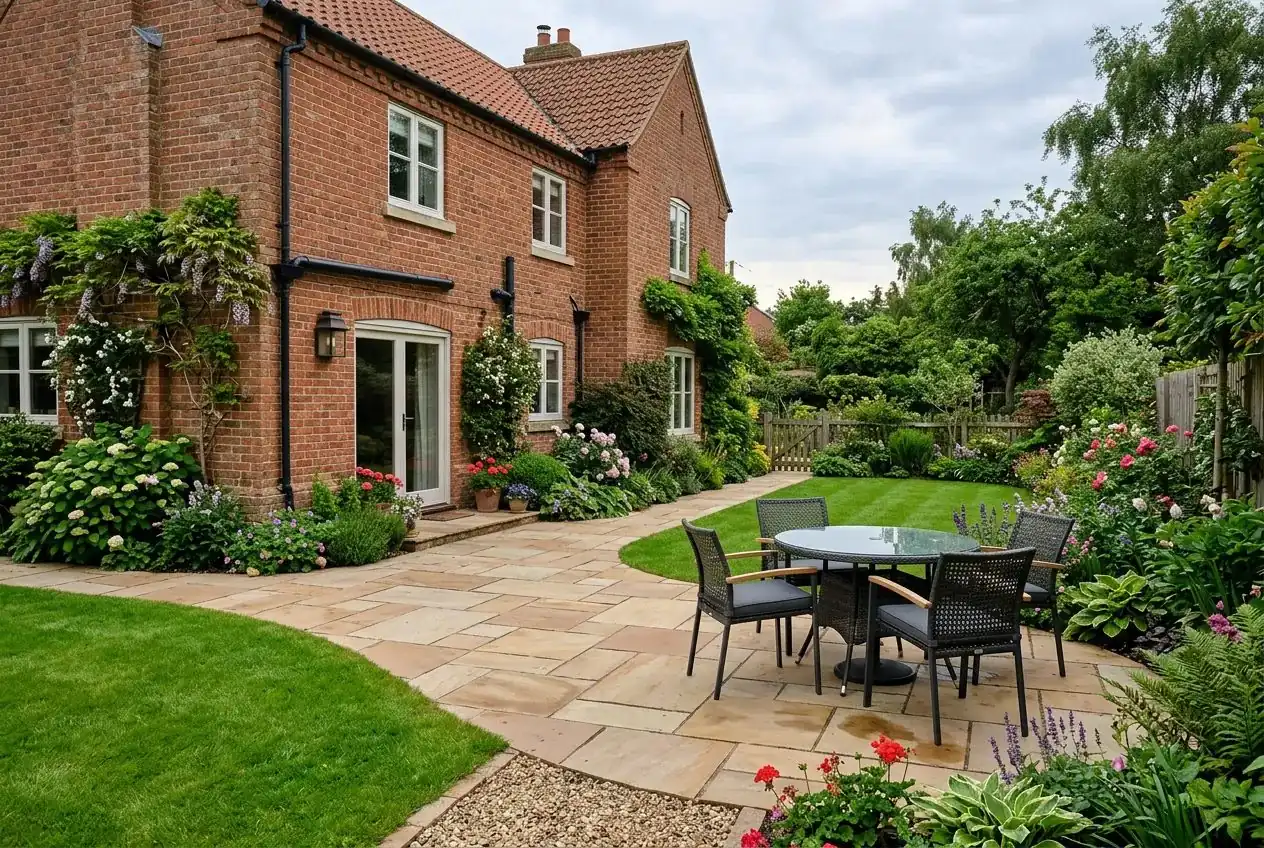
We lay block paving, resin bound, tarmac, gravel and pattern imprinted concrete drives, and patios and garden paving out the back. Each has its place:
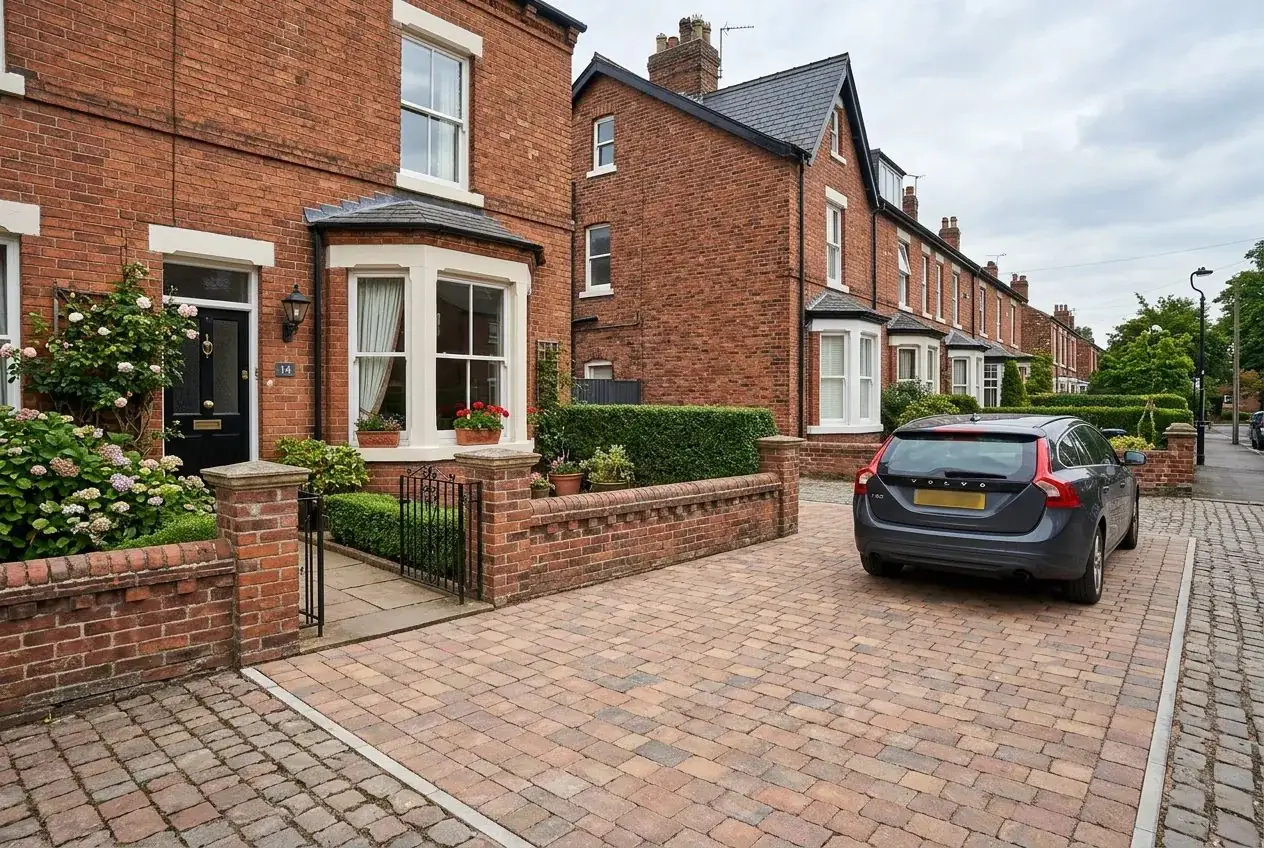
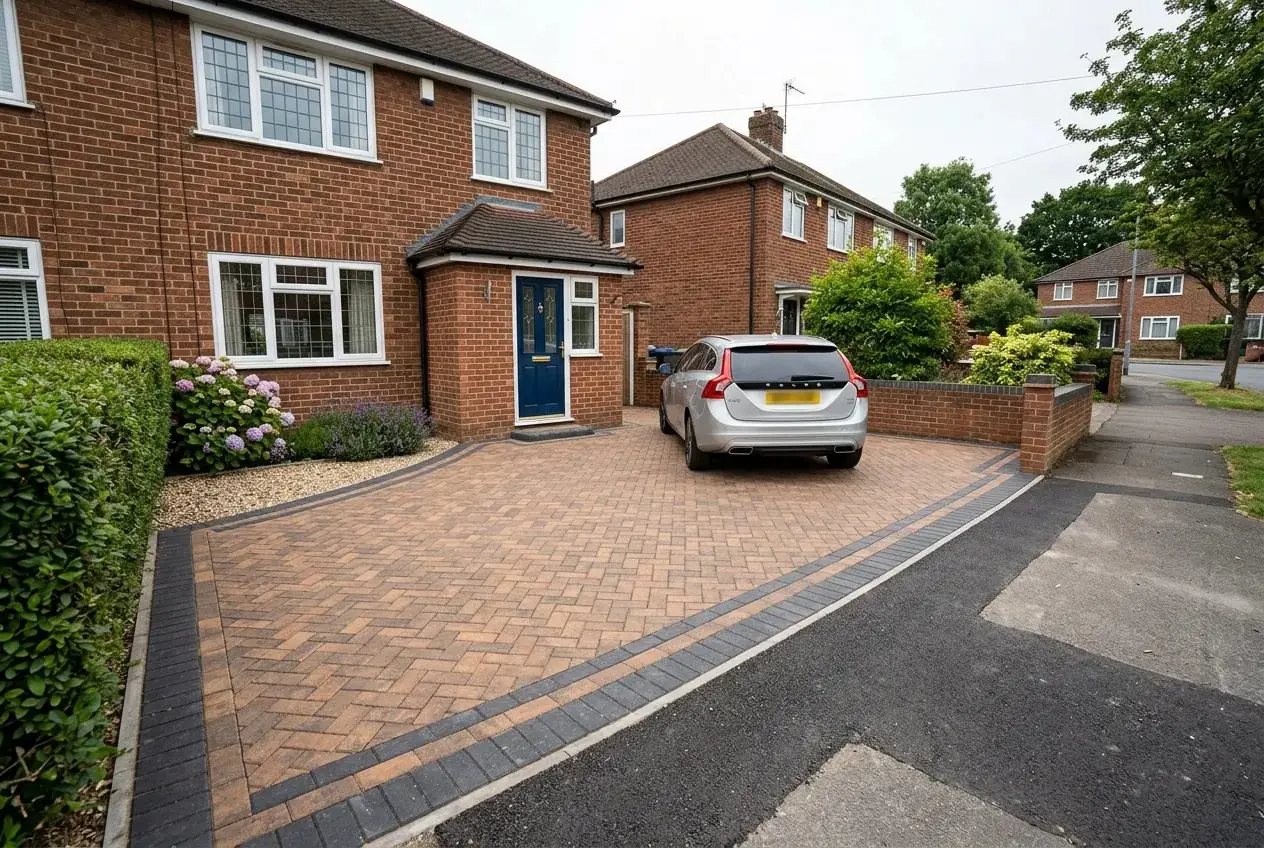
- Block paving gives the widest choice of colour and pattern and is easy to repair.
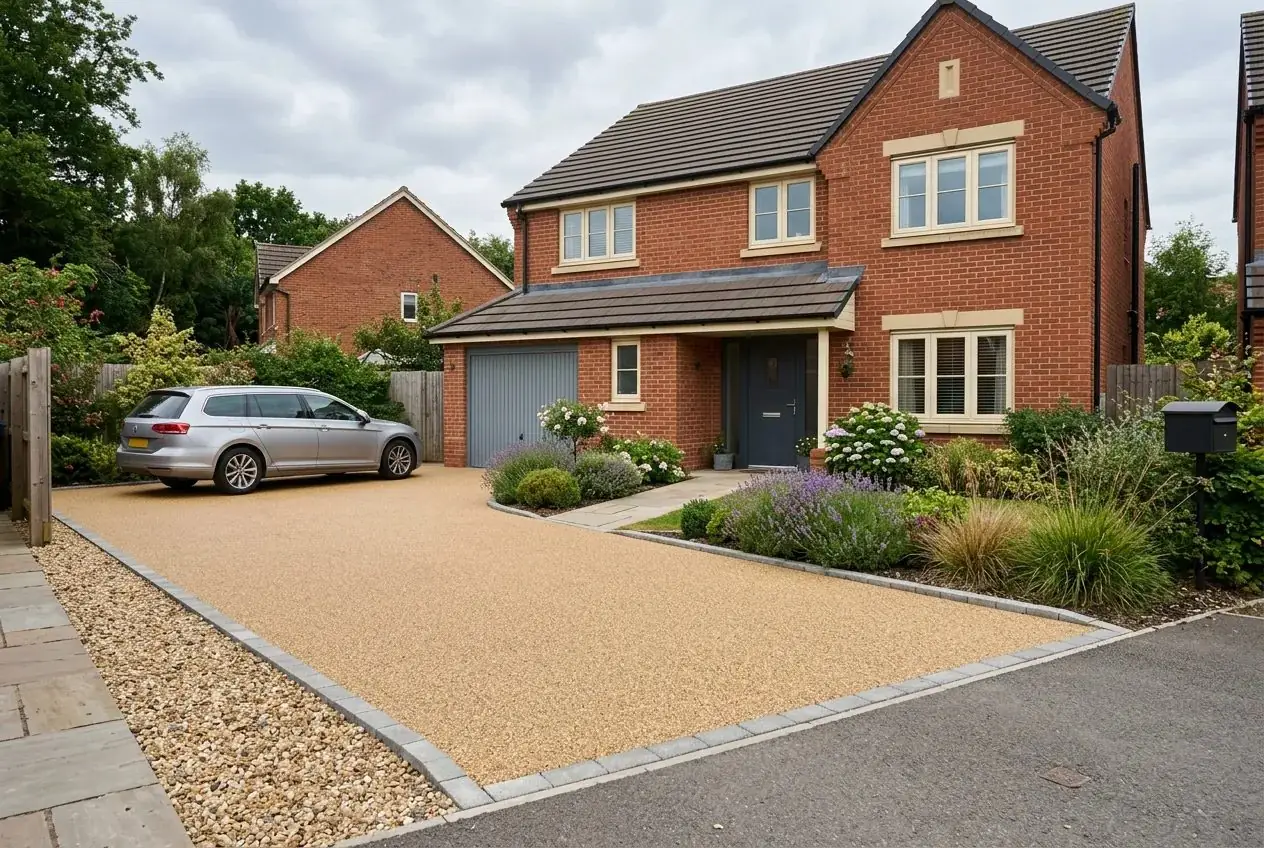
- Resin bound is smooth, porous and has no joints for weeds.
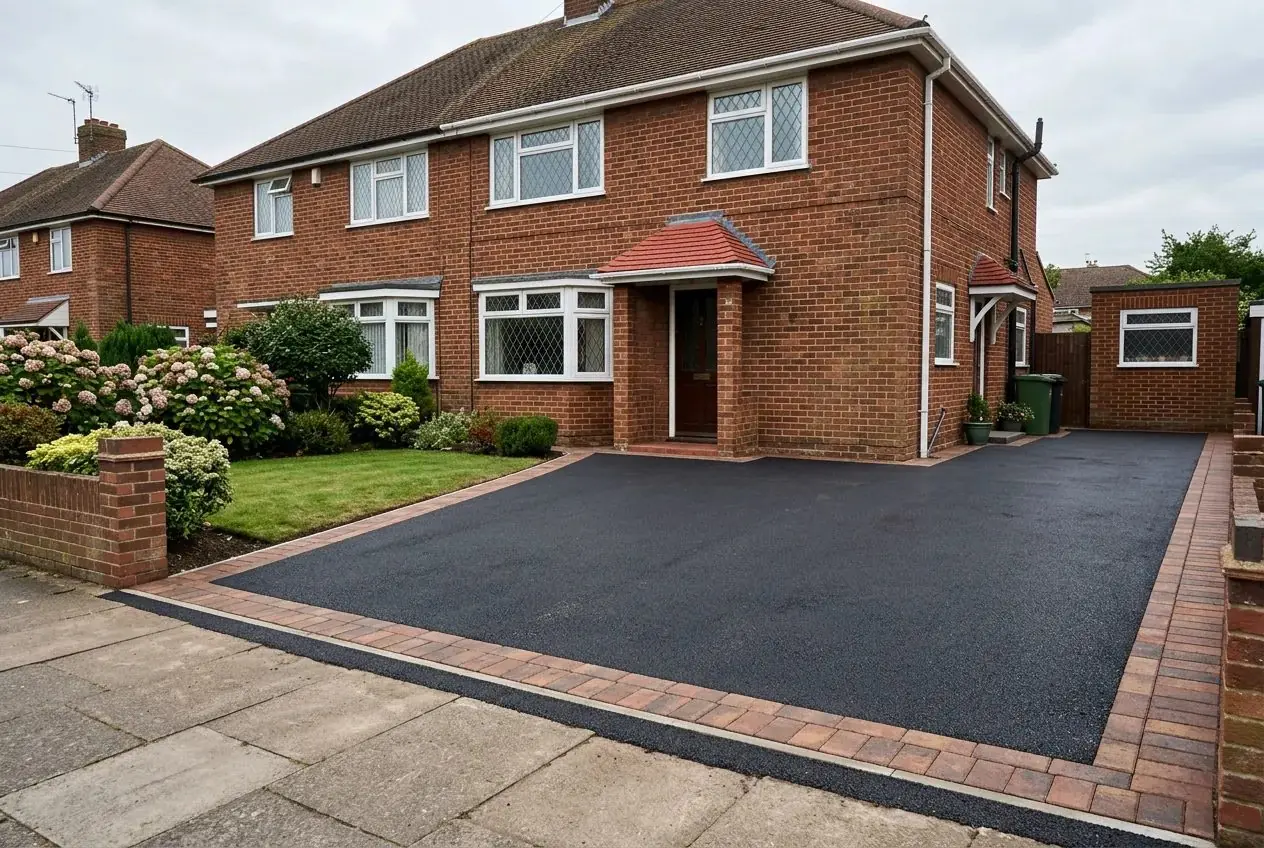
- Tarmac is quick to lay and hard-wearing, and looks sharp with a block edge.
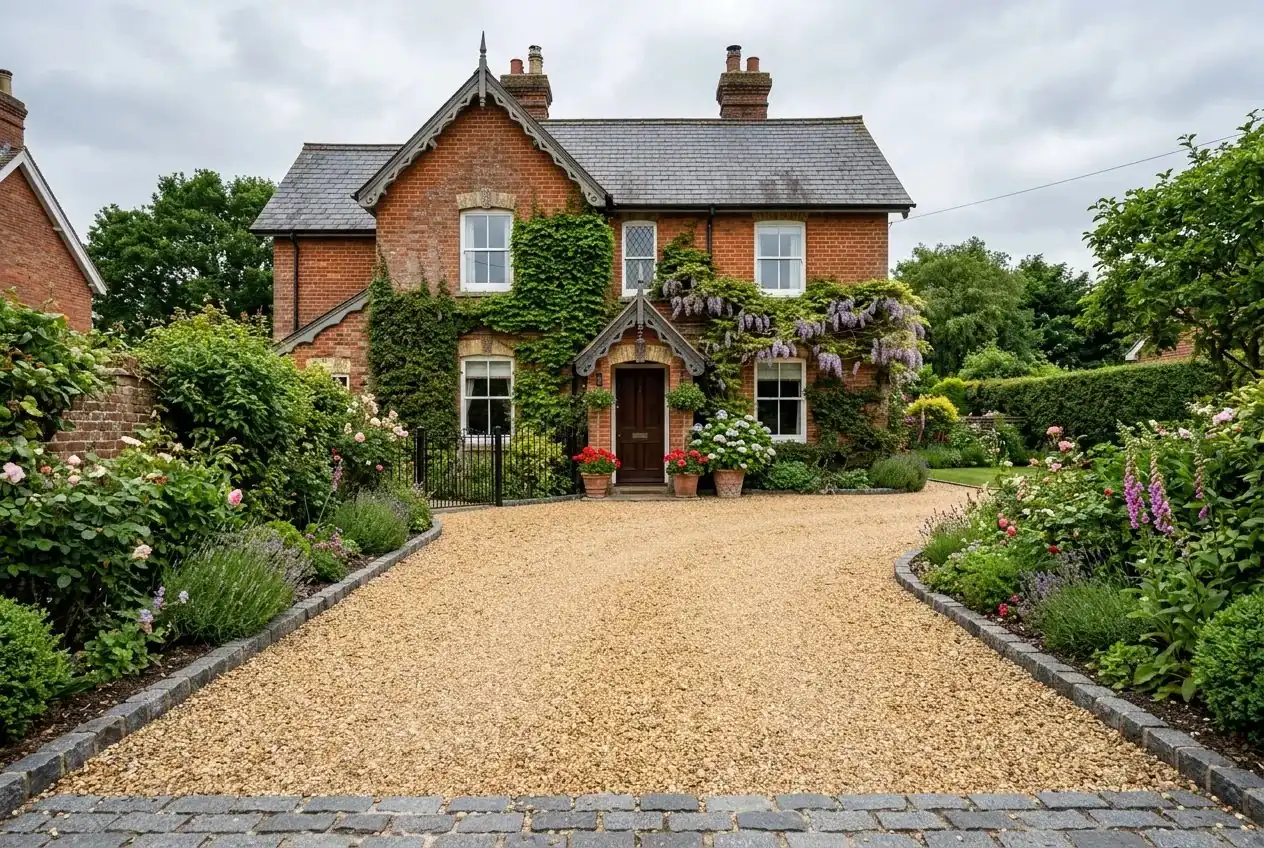
- Gravel is the simplest surface and drains naturally.
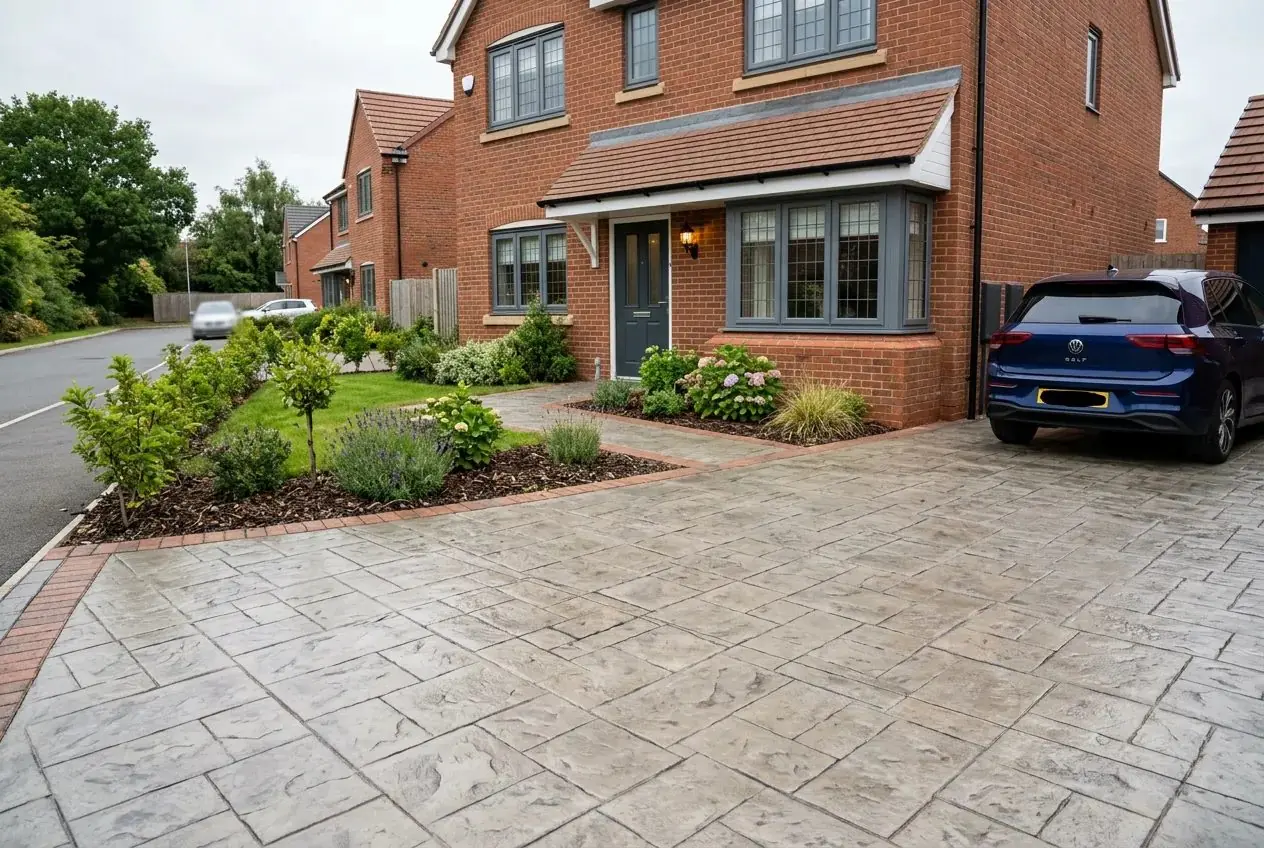
- Imprinted concrete is one solid, coloured slab stamped with a pattern.
If you are torn between the three most popular, our guide to resin, block paving and tarmac compares them side by side.
Matching the drive to the house
Darlington's housing changes from one side of town to the other. Victorian and Edwardian terraces around the West End usually have short frontages that suit gravel or sett-style blocks. The interwar and post-war semis of Cockerton, Mowden, Haughton and Eastbourne have room for a two-car drive in block paving or tarmac. The later estates at Whinfield, Faverdale and West Park often have a builder's drive due for replacement, and many owners there choose resin or charcoal paving. In the villages, the older houses around the greens look best with traditional, permeable finishes.
Planning and the dropped kerb
Paving a front garden does not usually need planning permission if the surface is permeable or drains to a lawn or border. More than five square metres that drains onto the road does. The West End, Cockerton Village, Haughton-le-Skerne, Hurworth, Heighington and Middleton One Row are conservation areas, where the look of the frontage gets more attention.
A new or wider pavement crossing always needs Darlington Borough Council's approval. The council either builds it or licenses the work, and a licence can take up to ten weeks, so it is worth applying early. Our planning and dropped kerb guide walks through it.
What decides the price
We do not publish prices, because two drives the same size can cost very different amounts. The surface you choose, the area, how much has to be dug out and taken away, the drainage, the edging and whether you need a dropped kerb all move the figure. Our cost guide explains each one, so you know what to compare when quotes come in.
Questions people ask
Do you charge for a quote?
No. We visit, measure up and give you a quote for free, and there is no obligation to go ahead.
Which areas do you cover?
Darlington's DL1, DL2 and DL3 postcodes, including the West End, Cockerton, Mowden, Haughton, Eastbourne, Whinfield, Faverdale, Harrowgate Hill and Blackwell, plus Hurworth, Middleton St George and Heighington.
How long does a new drive take?
Most drives take a few days on site, depending on size, surface and how much has to come out. Resin and tarmac usually go down quickest once the base is built.
Do I need planning permission?
Usually not, if the surface is permeable or drains to a border. A dropped kerb always needs council approval.