Choosing the stone
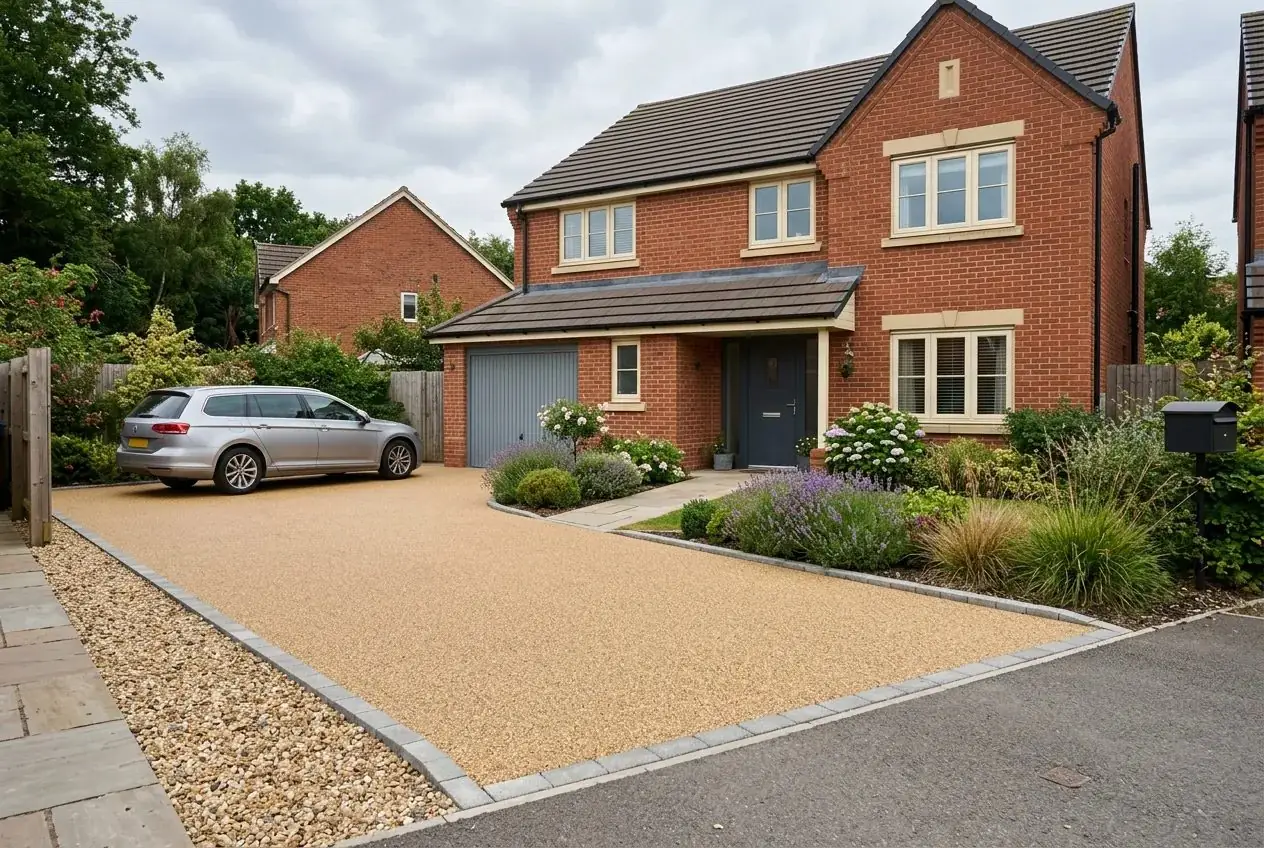
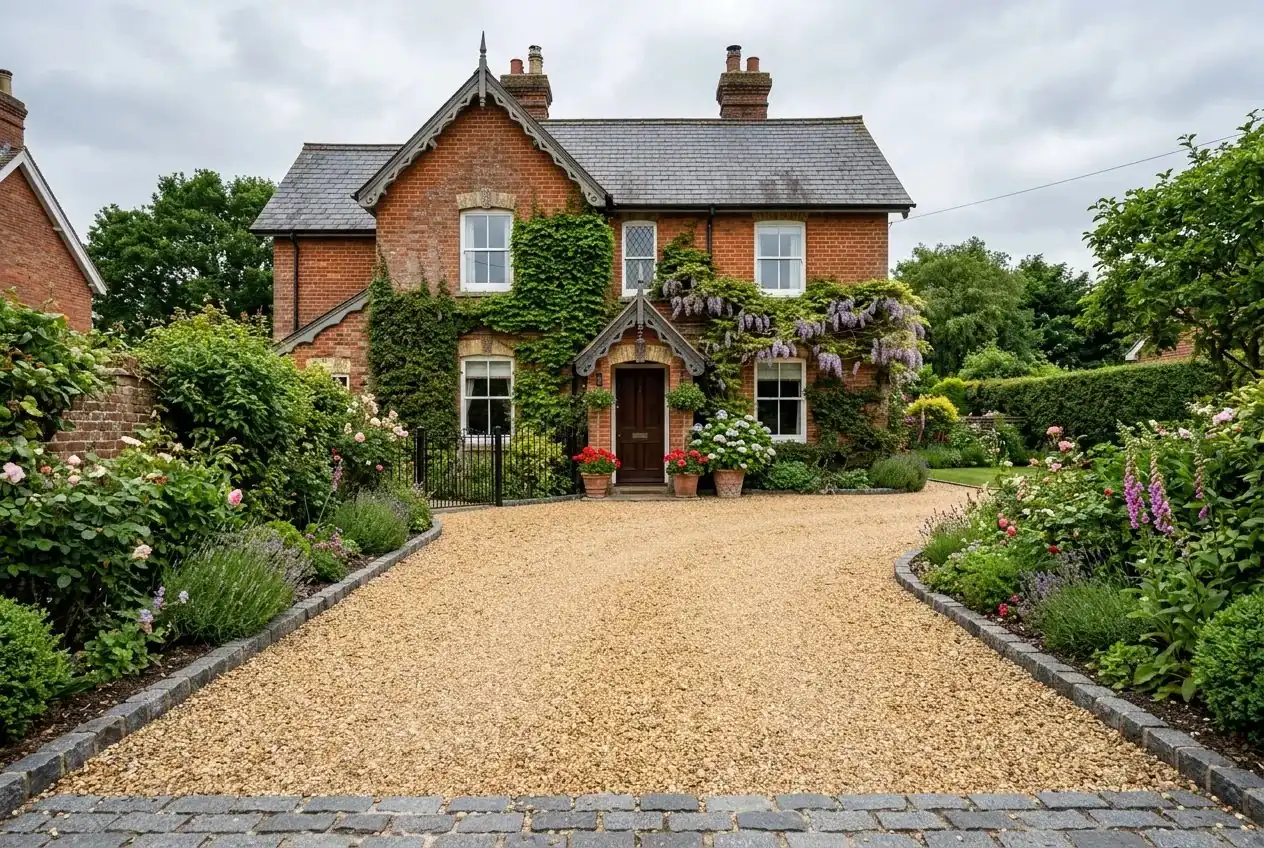
Round pea gravel looks pretty but rolls underfoot and under tyres. For a drive we use angular stone, usually 10 to 20mm, which locks together and stays put. Colours range from golden and buff to grey and slate; golden and buff blends look warm against Darlington's red brick, while greys suit stone houses in the villages.
Grids stop rutting
Loose gravel on a drive slowly forms ruts where the wheels run and spreads onto paths and the pavement. A cellular plastic grid, laid on the base and filled with stone, holds the gravel in place, keeps the surface level and makes it easier to walk and wheel a bin over. On a long village drive it is the difference between a tidy surface and one that needs raking every week.
Edging and an apron
Gravel needs a firm edge on every side. We use blocks, setts or timber set in concrete. At the entrance, a paved apron of a metre or so stops stones being carried onto the road and gives a clean line at the kerb. The council's crossing, if you need one, is built separately to its own specification.
Drainage and planning
Water passes straight through gravel and its base, which is why gravel is treated as a permeable surface. You can gravel a whole front garden without planning permission. On heavy clay we still make sure the base drains, so water does not sit under the stone.
Keeping it tidy
Rake it level now and then, top it up every few years as stone settles or travels, and pull weeds when they are small. A membrane under the base cuts weeds right down. Leaves are easiest to clear with a leaf blower on a low setting.
Questions people ask
Is gravel a good choice for a terrace?
Yes. It suits Victorian and Edwardian houses, drains naturally and works well on a short frontage when held in a grid.
Does gravel need planning permission?
No. It is permeable. A new dropped kerb still needs council approval.
How do you stop the gravel going everywhere?
A cellular grid, solid edging and a paved apron at the entrance.