Semis around the green
In the 2021 Census just over half of Cockerton ward's homes (53%) were semi-detached and about a quarter (26%) were terraced, with few detached houses. Almost a third of households had no car, which is higher than the Darlington suburbs to the west, so plenty of front gardens are still lawns and hedges rather than parking.
When a Cockerton household does convert, the job is usually a straightforward rectangle: wall or hedge at the front, path to the door, a gap at the side. Brindle or charcoal block paving with a contrasting edge suits the brick, and tarmac with a block border is the plainer, quicker option.
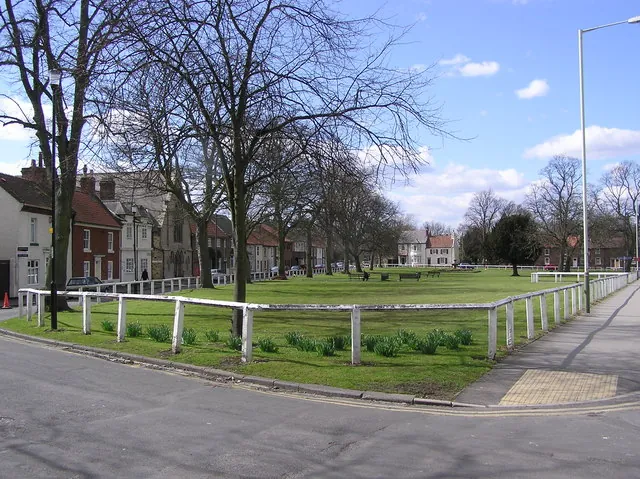
Ground near the becks
Cocker Beck and West Beck both run through the area. The British Geological Survey maps the ground at the centre of Cockerton as alluvium, a mix of clay, silt, sand and gravel laid down by the streams, which holds water and gives under load. On that kind of ground we dig deeper, lay a heavier sub-base and add a separating membrane, and we look carefully at where water will go once the lawn has gone. A channel drain across the front of the house is common here.
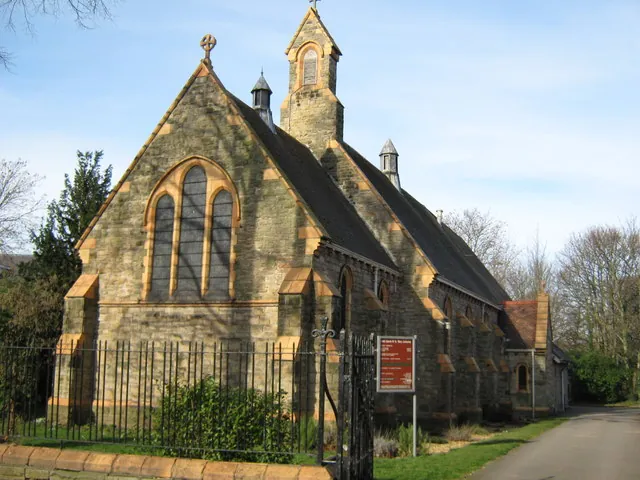
Overlay or dig out
A lot of Cockerton houses already have an old concrete or tarmac strip by the side of the house. If it is level, solid and not cracked, a new surface can sometimes go on top and save the cost of digging out. If it rocks, has sunk or has cracks that open and close with the seasons, it comes out. We tell you which after looking, not before.
The green and the conservation area
Cockerton Village conservation area covers the green and the older buildings around it, and several houses on Cockerton Green are listed Grade II. If your house fronts the green, we keep the materials muted and permeable and check whether any consent is needed. Away from the green, the normal front-garden rule applies: a permeable surface, or one that drains to a border, does not need planning permission.
For the kerb, Darlington Borough Council either builds the crossing or licenses the work, and it checks for trees, lamp columns and nearby junctions first. On the busier roads through Cockerton the junction check is the one to watch.
Questions people ask
What drive suits a Cockerton semi?
Block paving in brindle or charcoal with a darker border is the usual choice. Tarmac with a block edge costs less to lay and still looks smart against brick.
Why do drives near the becks need more work?
The soft, water-holding ground near Cocker Beck and West Beck moves more under weight, so a deeper, well-compacted base and good drainage stop the surface sinking.
Can I keep my old concrete drive?
Only if it is sound. We check for cracks, rocking slabs and sinking before suggesting an overlay.
Neighbouring areas
Mowden adjoins Cockerton to the south-west and Faverdale lies to the north. Our block paving page explains how a paved drive is built.
Sources: ONS Census 2021, Cockerton ward (TS044, TS045, TS054 via Nomis); BGS Geology Viewer, 1:50,000; planning.data.gov.uk: Cockerton Village conservation area and listed buildings; Darlington Borough Council: vehicle accesses; OpenStreetMap (road, beck and park names).