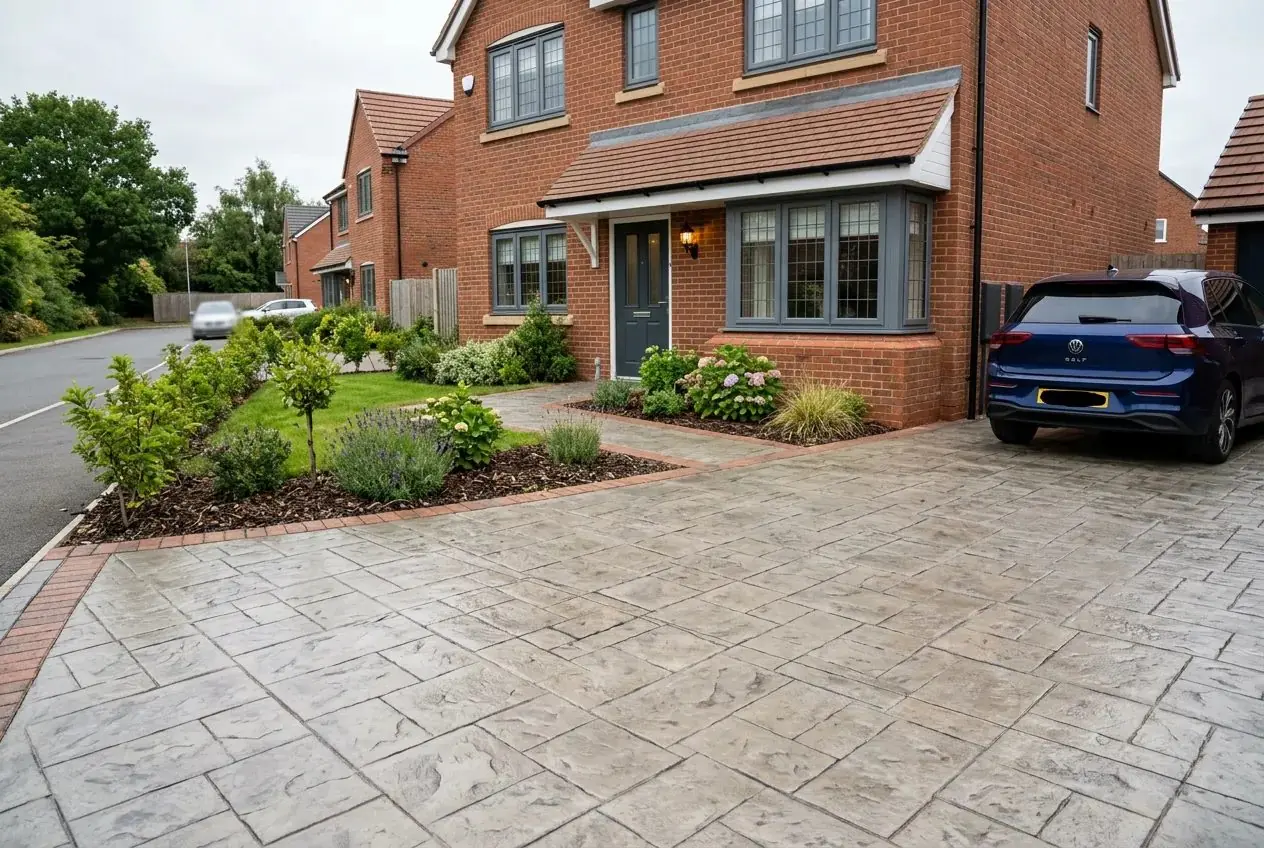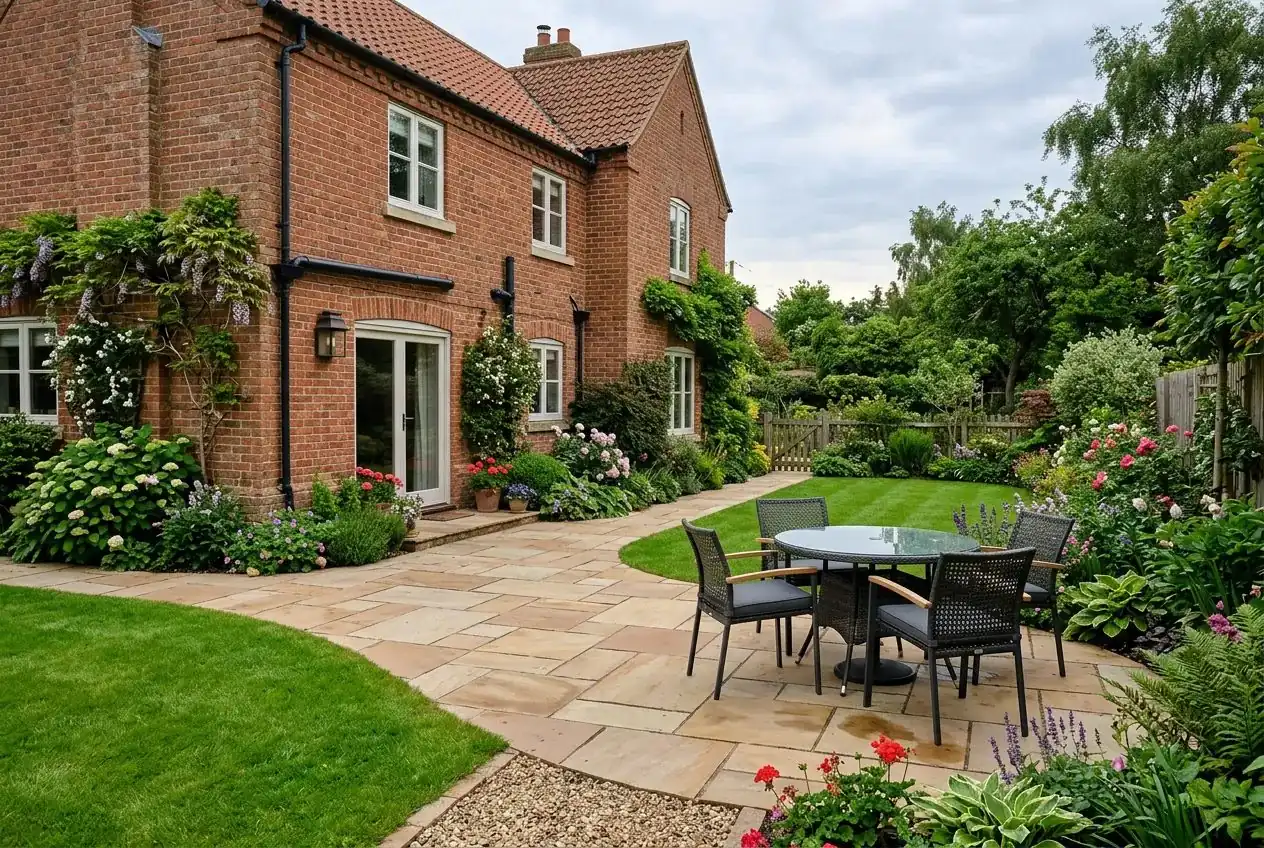
Materials
- Indian sandstone is natural stone with variation in colour and texture. It needs sealing and occasional cleaning.
- Porcelain is dense, stain-resistant and very consistent. It needs a special primer on the back to bond to the mortar bed.
- Concrete slabs come in many finishes, from smooth to riven, and are the most economical.
- Setts and blocks work for paths, edges and small courtyards.
How we lay a patio
We dig out turf and topsoil, build a compacted stone base and lay each slab on a full bed of mortar, not on dabs, which leave voids where water collects and frost lifts the slab. The patio falls gently away from the house so rain runs off, and it sits at least 150mm below the damp-proof course. Joints are filled with mortar or a modern jointing compound.
Things to plan for
- Where water goes: off the edge into a border, into a drain, or into a soakaway on clay.
- Levels: a sloping garden may need a step or a low retaining wall.
- Doors: the patio should not sit too high outside a back door or patio doors.
- Access: on a terrace, how materials will get through to the back garden.
Planning
Paving in a back or side garden is generally permitted development without the five square metre limit that applies to front gardens, though drainage is still your responsibility. Listed buildings can be different, so we check if your house is listed.
Questions people ask
Sandstone or porcelain?
Sandstone has natural character; porcelain is easier to keep clean. Both last well when laid on a full bed.
Why do patio slabs rock?
Usually because they were laid on spots of mortar, not a full bed. Laid on a full bed over a proper base, they stay put.
Do I need planning permission for a patio?
Not usually in a back garden. Check if your house is listed.