How it is built
We dig out, build a compacted stone base and set the edges. The concrete is poured with steel mesh reinforcement, a colour hardener is worked into the surface, and a release agent is applied before textured mats are pressed in to form the pattern. Once it has cured, we cut control joints, wash off the release agent and apply two coats of sealer.
On Darlington's clay the base and reinforcement matter most, because ground movement is what cracks concrete. Control joints give the slab a planned place to move, so any cracking happens along a straight line rather than across the pattern.
The trade-offs
- Repairs are harder than with block paving. A damaged section cannot be lifted and relaid invisibly.
- It needs resealing every few years to keep the colour and protect the surface.
- A smooth sealed surface can be slippery in frost. An anti-slip additive in the sealer helps.
- It does not let water through, so drainage has to be designed in.
Drainage and planning
Because the slab is impermeable, a front drive bigger than five square metres that drains onto the road needs planning permission. We avoid that by laying the drive to fall to a lawn, border or soakaway, or by adding a channel drain that runs to a soakaway.
Patterns and colours
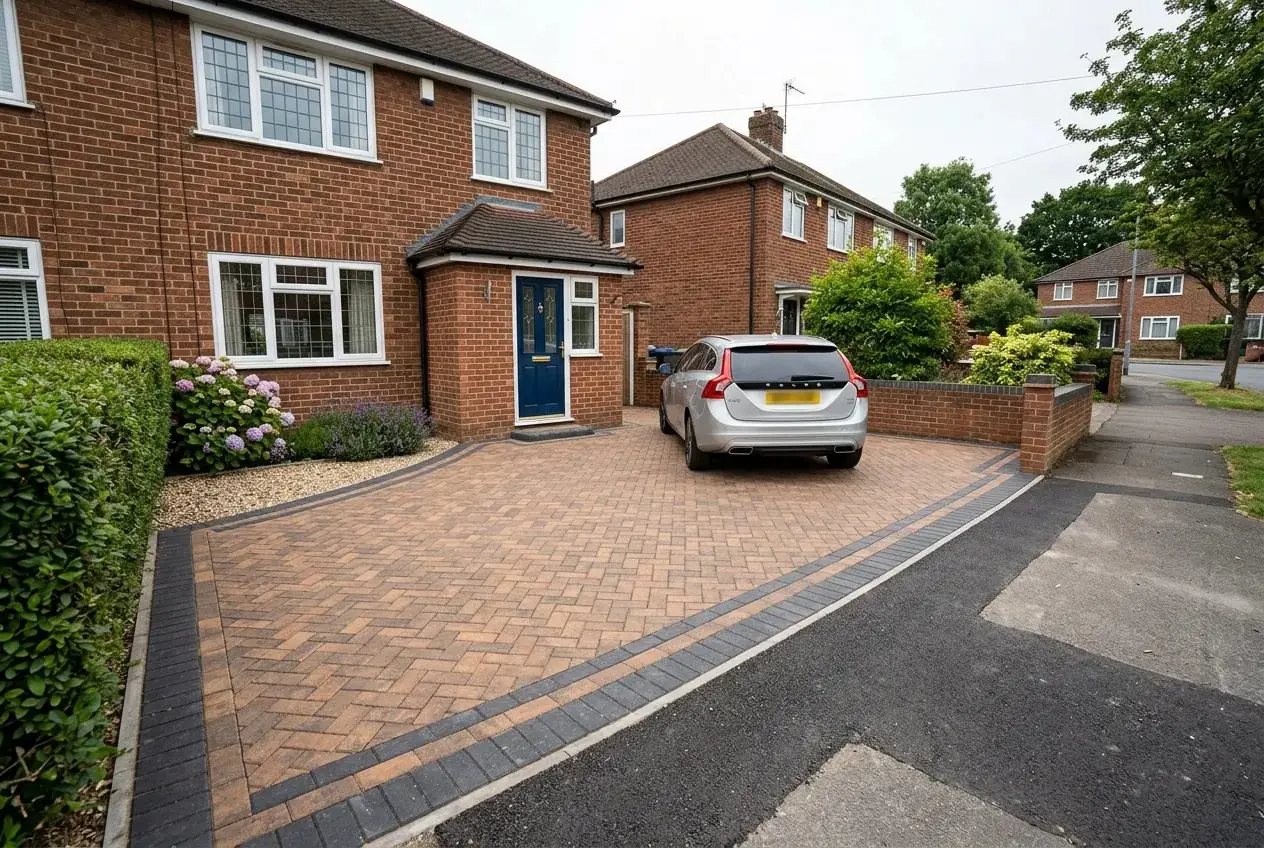
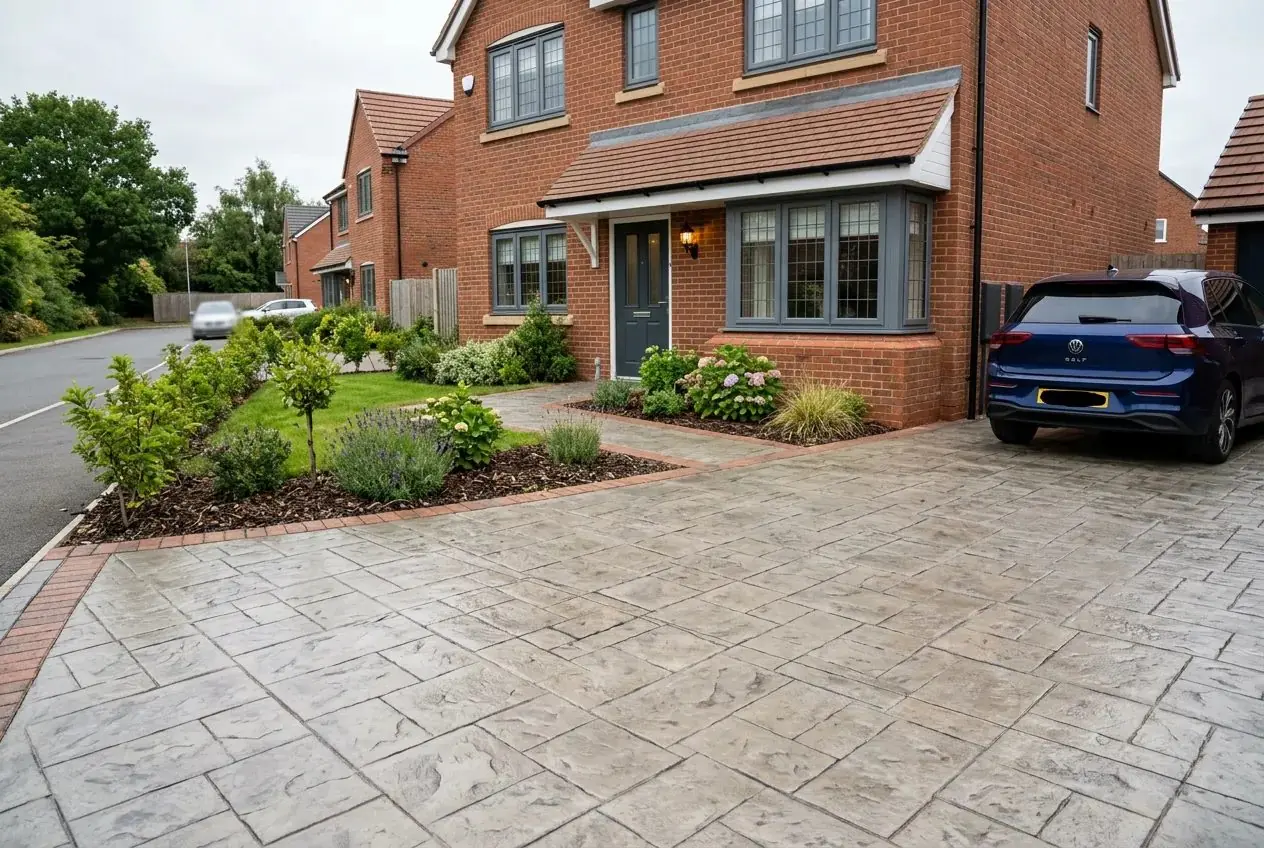
Ashlar slate, cobble, random stone and herringbone brick are popular patterns, with a contrasting border to frame them. Muted greys and buffs tend to age better than strong colours, and suit both newer houses and older brick.
Looking after it
Sweep it, wash it now and then, deal with oil spills quickly and reseal when the surface starts to look dull. A well-built, well-kept slab is one of the lowest-effort drives you can have.
Questions people ask
Does imprinted concrete crack?
Any concrete can. A deep base, steel reinforcement and control joints keep it to planned joints rather than across the pattern.
How often does it need resealing?
Every few years, depending on traffic and weather. It is a short job.
Does it need planning permission?
Only if more than five square metres drains onto the road. We design the falls so it drains to a border or soakaway instead.