How we lay it
After digging out and building a compacted stone sub-base, we lay the tarmac in two courses: a coarser base course for strength and a finer surface course for the finish. Each is rolled while hot so it compacts properly. Edging goes in first, set in concrete, so the tarmac has something firm to finish against and cannot spread.
Edging makes the difference
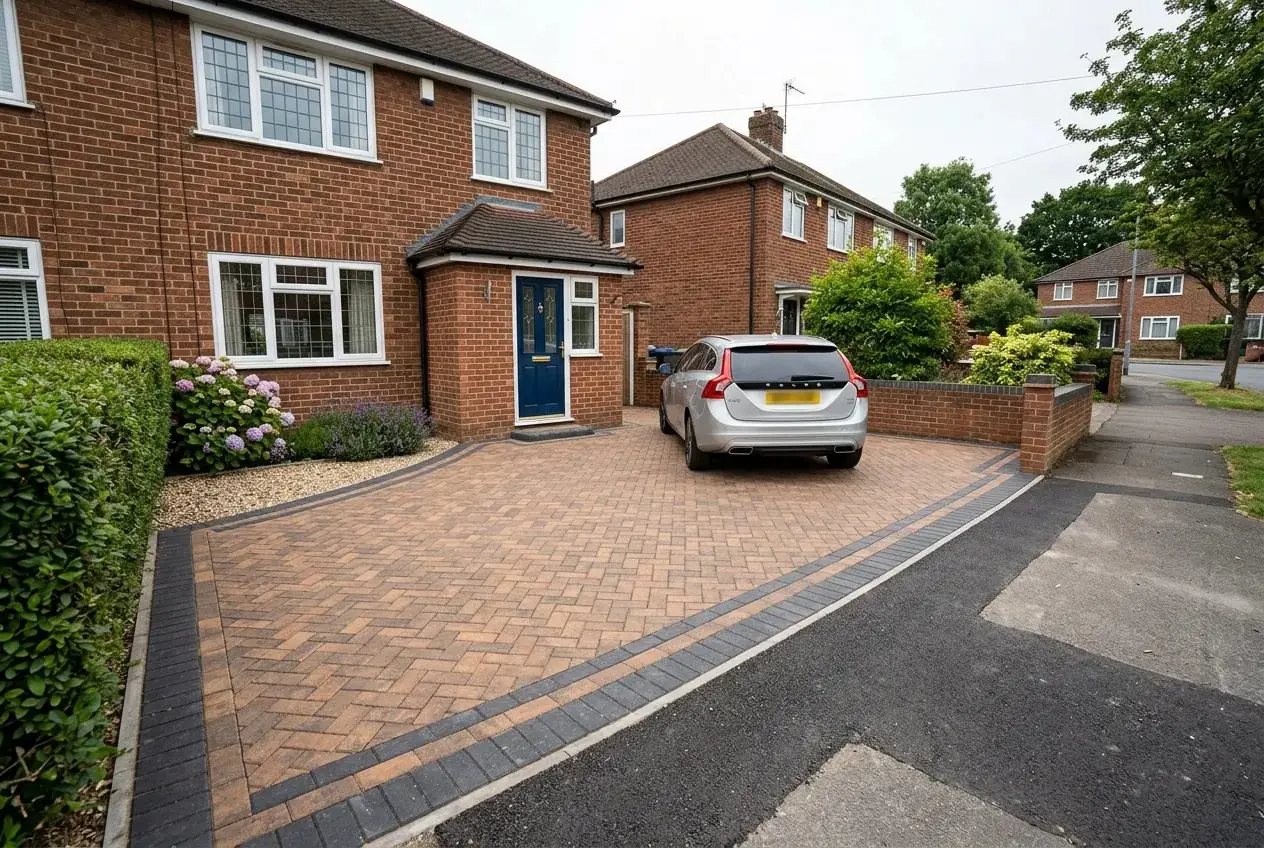
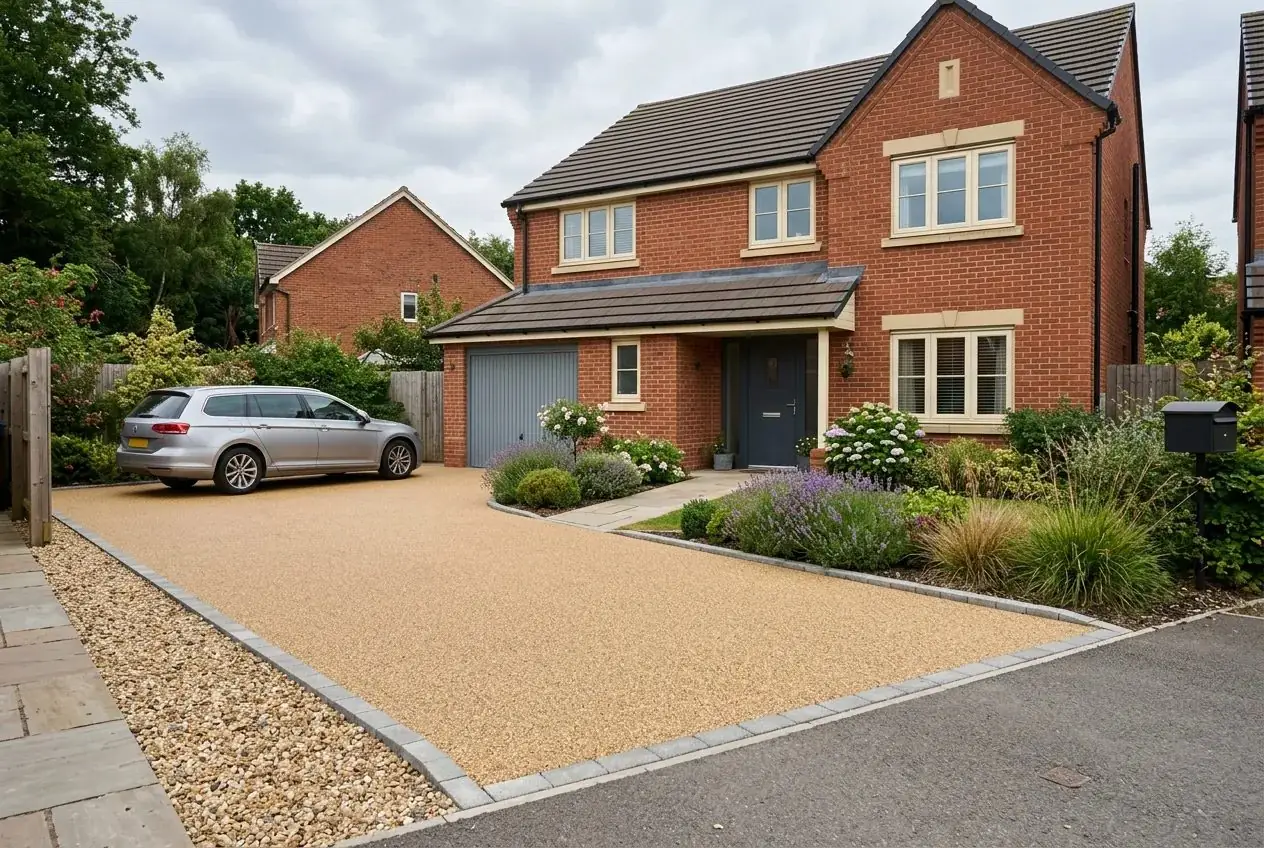
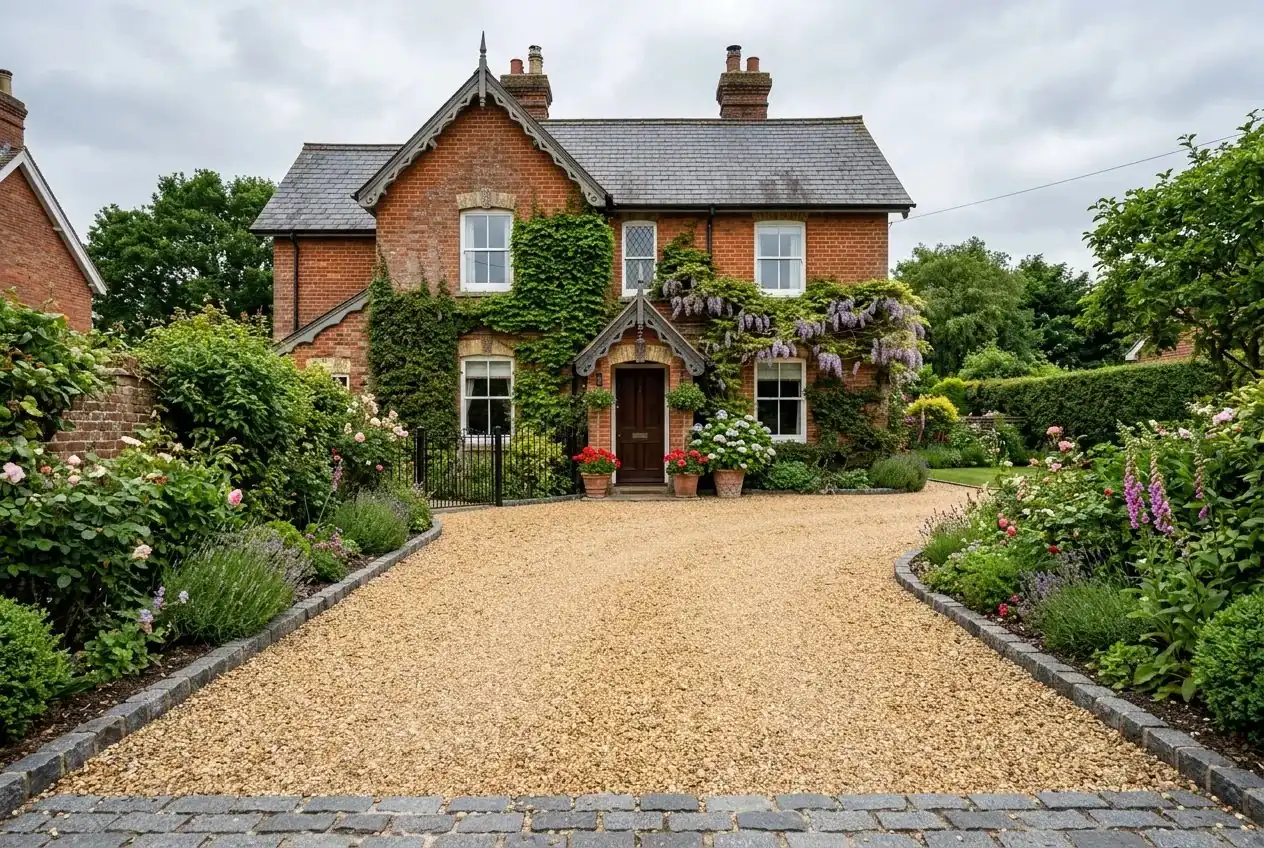
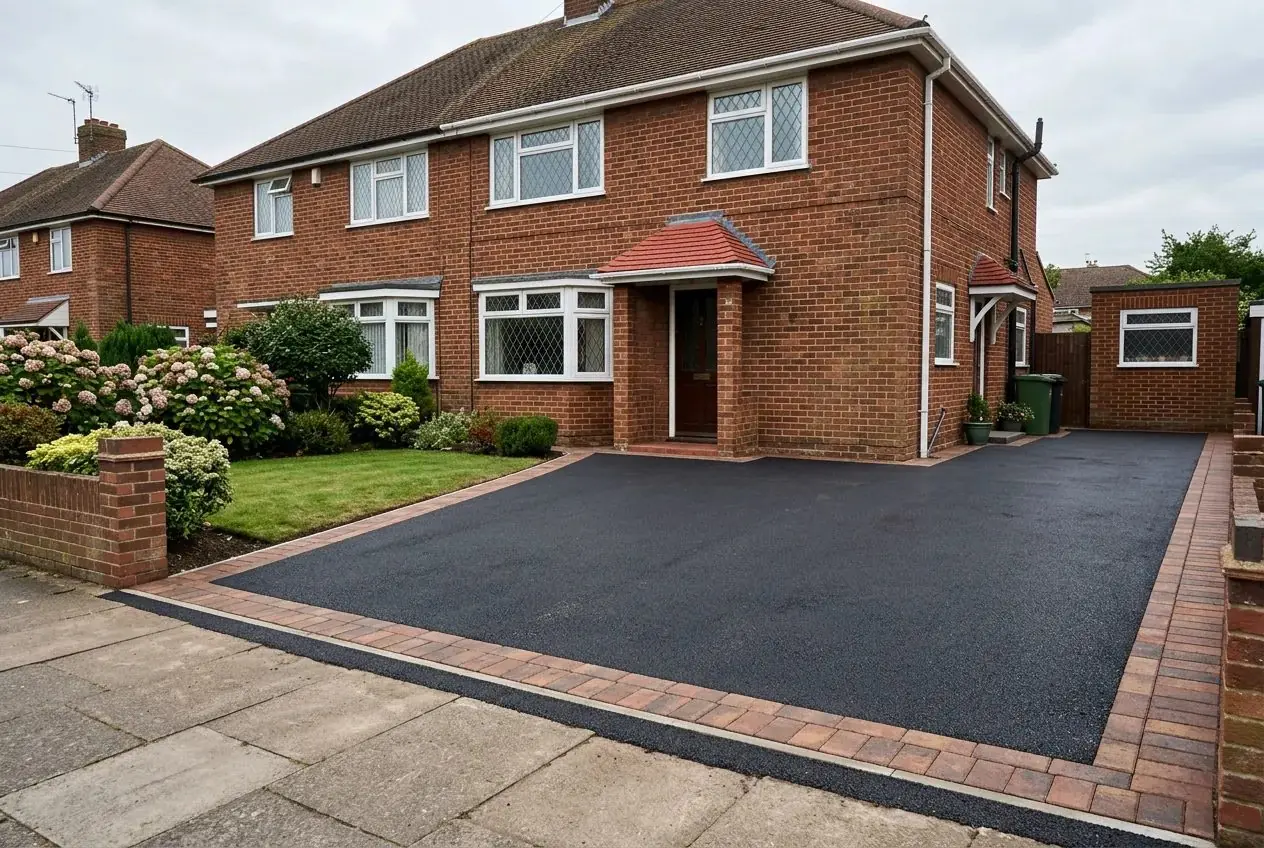
Plain tarmac running straight into the lawn looks unfinished and the edges crumble. A border of blocks or setts frames the drive, holds the edge and gives it a tidier, more considered look. Brindle or charcoal blocks are common in Darlington, and granite-effect setts suit older houses in the villages.
Resurfacing an old drive
If an older tarmac or concrete drive is solid and level, a new surface course can sometimes go over the top. If it has sunk, cracked badly or breaks up at the edges, the base has failed and has to be dug out. We look before we quote and explain which applies.
Water and planning
Standard tarmac does not let water through. A front drive bigger than five square metres that drains onto the road needs planning permission, so we either lay the drive to fall to a lawn, border or soakaway, or use porous tarmac over a free-draining base. Porous tarmac has fewer fine particles, leaving gaps for water to pass through.
Looking after a tarmac drive
Fresh tarmac is softer for the first few weeks, especially in warm weather, so avoid turning the wheels on the spot while the car is stationary. After that it needs little more than sweeping and the odd wash. Treat oil and fuel spills quickly, as they can soften the surface.
Questions people ask
Is tarmac a good surface for a busy family drive?
Yes. It is hard-wearing, copes with cars turning and is quick to lay.
Why add a block edge?
It holds the edge of the tarmac firm, stops it crumbling into the lawn and gives a neater finish.
Can tarmac go over my old drive?
Sometimes, if the old base is solid and level. A sunken or broken drive needs digging out first.