The village and the streets around it
Haughton falls in the Haughton and Springfield ward. In the 2021 Census about 53% of homes there were semi-detached, 18% terraced and 17% detached, and roughly a quarter of households had no car. Salters Lane South runs through the area, lined with the kind of semi that has a decent garden in front and a side path to the back.
On those streets a new drive is a familiar job: lift the lawn, build a proper base, and lay block paving, tarmac with a border, or resin. Around the old village the houses are older and often closer to the road, and gravel or sett-style paving looks more at home.
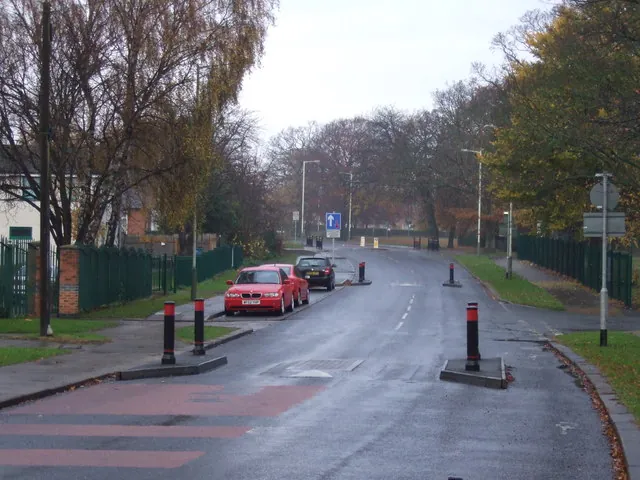
Building on clay
The British Geological Survey maps Haughton on till, the stiff clay left behind by glaciers. Clay holds water in winter, shrinks in a dry summer and moves with the seasons, and that is why drives laid on a thin base start to dip after a few years. We dig out to a firm formation, lay and compact a crushed-stone sub-base in layers, and use solid, concrete-backed edging so the surface cannot creep. Where a drive slopes towards the house, a channel drain at the threshold takes the water away.
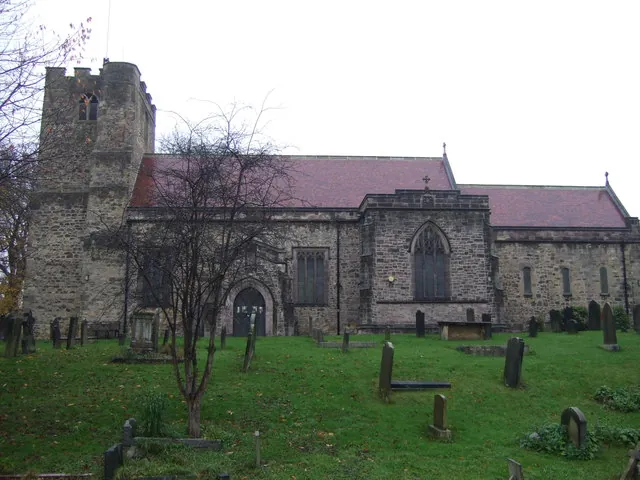
Around St Andrew's
The heart of the village is the Haughton-le-Skerne conservation area. As anywhere in England, more than five square metres of front garden paved with a surface that drains onto the road needs planning permission; a permeable surface, or one that drains to a border, does not. Inside the conservation area we also think about how the drive looks from the street: traditional colours, boundary walls kept and repaired, and no harsh, shiny finishes.
Getting the kerb approved
A new or wider crossing needs Darlington Borough Council's approval. The council can build it or license your contractor under Section 184, and it says a licence can take up to ten weeks, so it is worth applying early. Common reasons for refusal include nearby trees, lamp columns or telegraph poles, a junction close by, or a gradient steep enough to ground a car.
Questions people ask
What suits a cottage near the church?
Gravel or sett-style block paving in muted tones. Both suit older stone and brick, and both can be laid to let rainwater soak away.
Why do drives sink on clay?
Clay swells when wet and shrinks when dry. A thin base cannot spread the load, so the surface follows the ground. A deeper, well-compacted base prevents it.
Do I need permission for a drive in Haughton?
Not usually for the drive itself if it is permeable or drains to a border, but the dropped kerb always needs a council licence. In the conservation area, check before changing a boundary wall.
Next door
Whinfield lies just to the north-west and Harrowgate Hill beyond it. Our gravel driveways page covers the permeable option in detail.
Sources: ONS Census 2021, Haughton & Springfield ward (TS044, TS045 via Nomis); BGS Geology Viewer, 1:50,000; planning.data.gov.uk: Haughton-le-Skerne conservation area; Darlington Borough Council: vehicle accesses.